Industry News
Qwen4-Max Video API: Limits, Pricing, and What Teams Need
Alibaba launched Qwen4-Max on November 16, 2026 with 2-hour video input and lower Singapore API prices. Limits, costs, and caveats for video teams.
TL;DR
Qwen4-Max is now on Alibaba Cloud Model Studio with multimodal video understanding, a 1M-token context, and Singapore list prices 25% below Qwen3.8-Max. It answers questions about clips you send; it does not index a full CCTV archive.
On November 16, 2026, Alibaba Cloud added qwen4-max to Model Studio in the International (Singapore) scope, per the official model releases changelog. For enterprise teams comparing video understanding APIs, the headline is not just a new flag on a leaderboard: Alibaba positions Qwen4-Max as a multimodal flagship that accepts text, images, and video in one call, ships thinking mode and tool calling, and cuts Singapore list prices below the prior Qwen3.8-Max tier on the same day the pricing page was refreshed.
That matters because many security, operations, and media workflows still treat video as something you scrub manually. A managed model that accepts up to two hours of video per request changes what a prototype can do in an afternoon. It does not, by itself, turn a VMS archive into something you can query in plain English across every camera. This post separates what Alibaba actually documents from what procurement teams should plan for.
What is Qwen4-Max?
Qwen4-Max is Alibaba's next-generation Qwen flagship in Model Studio. The November 16 changelog entry describes it as combining text generation, image and video understanding, and deep reasoning, aimed at coding, office productivity, frontend design, and complex agentic tasks, with web search, tool calling, structured outputs, and compatibility with OpenAI and Anthropic API shapes.
Alibaba's text and visual understanding guide recommends qwen4-max when you prioritize quality over the lighter qwen3.8-flash tier. The same page lists qwen4-max with a 1M-token context, thinking mode, function calling, built-in tools, and structured output support.
For video teams, the important distinction is product shape: Qwen4-Max is a request-response model. You send input (including video files or URLs your integration allows), and you receive text. That is different from a platform that indexes every minute once and answers thousands of investigator queries later without re-uploading the file.
What video limits did Alibaba publish?
The limits are explicit in Alibaba's parameter table, and they define what "video API" means here.
| Parameter | qwen4-max (per Alibaba docs) |
|---|---|
| Context window | 1M tokens |
| Max output | 131,072 tokens (non-thinking); 262,144 tokens (thinking + answer combined) |
| Max video duration | 2 hours per video |
| Max video size | 2 GB |
| Max videos per request | 64 |
| Max images per request | 2,048 (16M pixels per image) |
Those numbers are generous for single-file review: an exported incident clip, a training module, or a compliance sample from a drone flight. They are not a substitute for retention math on a recorder that holds 30 cameras for 90 days, a topic our CCTV storage calculator and how much storage CCTV cameras need guide cover.
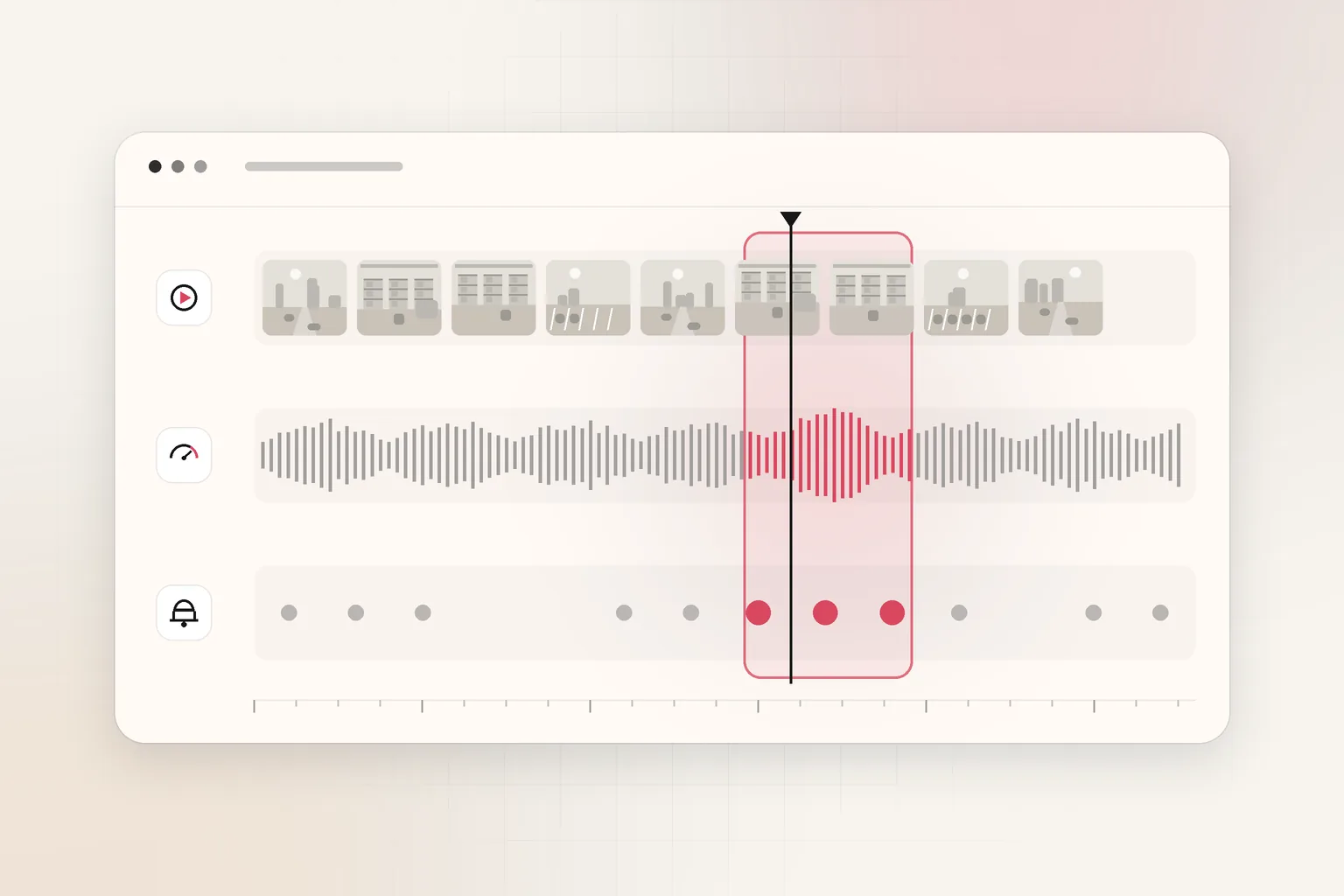
If your workflow is "find every mention of a forklift protocol on screen across last month," you need indexing and search, not another two-hour upload slot. See what is video indexing for how that layer differs from clip Q&A.
How much does Qwen4-Max cost in Singapore?
Alibaba's Model Studio pricing page, last updated November 16, 2026, lists pay-as-you-go rates for qwen4-max in Singapore (International scope):
| Model | Input (per 1M tokens) | Output (per 1M tokens) | Free quota note |
|---|---|---|---|
| qwen4-max | $1.50 | $4.50 | 1 million tokens for 90 days in Singapore |
| qwen3.8-max | $2.00 | $6.00 | 1 million tokens for 90 days in Singapore |
The 25% drop is arithmetic on those list prices: input falls from $2.00 to $1.50 per million tokens, and output from $6.00 to $4.50 per million tokens. Promotions may differ; Alibaba tells buyers to check the Model Studio console for current campaigns.
Context caching is priced separately. For qwen4-max in Singapore, Alibaba lists cache reads at $0.075 per million tokens, explicit cache creation at $1.875 (5-minute lifetime) or $3.00 (1-hour lifetime). Only input tokens receive the cache discount; output stays at the standard rate. Agent workflows that resend long system prompts and tool manifests every turn should model prefix stability and cache lifetime, not just the headline input price.
Regional coverage in the pricing tables also includes Beijing, Frankfurt, Virginia, Tokyo, and Hong Kong, but the 1M-token free quota note applies only in Singapore on the page we cited. Budget in the region where your data is allowed to land.
How does Qwen4-Max compare with other cloud video models?
Several clouds now sell multimodal models that accept video inline. The pattern is similar; the limits and billing units differ.
| Approach | Typical strength | Typical gap for investigations |
|---|---|---|
| Qwen4-Max (Alibaba Model Studio) | Long context, tools, structured JSON on clips you send | No built-in archive index across files |
| Gemini Robotics ER 2 (Google Cloud preview) | Moment finding and task verification on streams | Robotics-first; not an archive search product |
| Nemotron 3.5 Super VL on SageMaker | Clip Q&A after you stage video in AWS | Same index gap on petabyte archives |
We covered Google's October 2026 Gemini Robotics ER 2 launch and November 2026 NVIDIA Nemotron 3.5 Super VL on SageMaker JumpStart along those lines. Treat vendor benchmarks as signals, not guarantees on your cameras.
For a side-by-side of API orchestration versus finished search, see video intelligence API multimodal retrieval and multimodal video analysis for operational review.
Is Qwen4-Max a replacement for a video intelligence platform?
No, unless your entire need fits in a single API call per question.
Alibaba documents Qwen4-Max as a model endpoint: multimodal input, text output, optional tools, optional thinking. It does not describe:
- Continuous ingest from a VMS or NVR
- Permissioned search across thousands of files
- Parallel indexes for speech transcripts and on-screen text (OCR) with investigator-grade ranking
- A dashboard where a non-developer runs searches
Those are the problems video intelligence platforms solve on recorded video. Ceptory indexes video you upload or add by URL through the REST API, then lets authorized users search in natural language across scenes, speech and on-screen text from the dashboard. Pricing is $0.042 per minute indexed plus $0.0015 per minute infrastructure, $4 per 1,000 searches, with the first 10 minutes of indexing free (pricing). There are no SDKs; integrations use HTTP and API keys.
Honest fit: use Qwen4-Max when engineers are building agents or custom apps that need strong reasoning on a bounded video payload. Use Ceptory (or a comparable platform) when investigators, safety officers, or producers must query an archive repeatedly without shipping the same two-hour file on every search.
Deployment location still matters for regulated footage. Our cloud vs private cloud vs on-premise guide walks the trade-offs when clips cannot leave a region.
Another hosted route arrived on November 18: Pegasus 1.5 in Snowflake Cortex lets teams call a video model from SQL.
What should video teams do now?
-
Read the November 16 docs, not a recap. Confirm limits, regions, and prices on model releases, pricing, and text and visual understanding before you estimate a pilot.
-
Classify your workload. If the job is one clip, one answer, a multimodal API fits. If the job is many files, many reviewers, many queries, budget indexing and search separately.
-
Model token burn honestly. Thinking mode shares one output budget between chain-of-thought and the final answer on Qwen4-Max (up to 262,144 tokens combined per Alibaba's table). Long deliberations can crowd out the user-visible response.
-
Test on your own exports. Pull ten real clips (low light, PTZ motion, compressed sub-streams) and measure latency, cost, and failure modes. Third-party articles are useful for price math; they are not acceptance tests.
-
Keep evidence workflow separate. For incident documentation, pair search with the incident report template and how to write an incident report from video footage.
Which integration path does Alibaba document?
Model Studio exposes qwen4-max through several calling styles listed on the text generation API reference: OpenAI-compatible Chat Completions, OpenAI Responses (with built-in web search and code interpreter in that shape), Anthropic-compatible Messages, and DashScope as the native interface. For video-heavy prototypes, the practical choice is whichever client library your team already ships in production, because the hard part is staging video bytes, not swapping JSON field names.
Alibaba also documents batch inference on some models at 50% of real-time price when latency can wait. That can help overnight compliance sampling jobs that summarize ten exports, but batch jobs still do not replace an interactive search UI for an investigator at a desk.
Token Plan is a separate route: Alibaba's token plan product updates note that Qwen4-Max joined Personal and Team editions on November 16, 2026, while Qwen4-Max-Preview remains Token Plan only through November 25, 2026 (UTC+8). Subscription access can forbid non-interactive automation on some plans, so procurement should read the plan terms before assuming the Singapore per-token prices apply to every workload.
What mistakes do teams make on day one?
The most common failure is treating video understanding as video search. A model that accepts 64 videos in one call still returns one text answer about that payload. Investigators need hundreds of queries per week across files that arrived yesterday and last year. Without a retained index, every query re-uploads data, re-spends tokens, and re-introduces latency.
The second mistake is ignoring audio quality. Warehouse ceilings, drone props, and hallway echo wreck ASR even when the visual model looks fine. If your workflow depends on spoken commands, validate microphones or accept that you will lean on on-screen text and visual search instead, as covered in how to search a video archive by speech and on-screen text.
The third mistake is region mismatch. Pricing tables and free quotas differ by region; Alibaba states the one-million-token free quota for several Max-family models applies only in Singapore on the international price list we cited. Sovereign or sector rules may forbid sending incident video to that region even when the price looks attractive.
Managed multimodal APIs are getting cheaper and longer-context. Qwen4-Max is a credible new option in that race. The procurement question is unchanged: do you need answers about clips you attach, or search across the archive you already retain? For the second problem, start with enterprise video search in natural language and the search feature page on Ceptory.
Frequently asked questions
When did Alibaba release Qwen4-Max?
Alibaba Cloud listed qwen4-max on Model Studio on November 16, 2026, in the International (Singapore) deployment scope, per the official model releases changelog.
How much does Qwen4-Max cost in Singapore?
The Model Studio pricing page lists $1.50 per million input tokens and $4.50 per million output tokens for qwen4-max in Singapore, compared with $2 and $6 for qwen3.8-max.
What are Qwen4-Max video input limits?
Alibaba's text and visual understanding guide lists up to 2 hours of video per request, a 2 GB maximum file size, and up to 64 videos in one call, alongside a 1 million token context window.
Can Qwen4-Max search thousands of hours of stored CCTV?
No. It analyzes video you attach to an API request and returns text. It does not build a persistent index or run ranked search across a recorder archive. That is a video intelligence platform job.
Does Qwen4-Max support thinking mode on video?
Yes. Alibaba documents thinking mode as supported on qwen4-max, with up to 131,072 tokens of non-thinking output or 262,144 tokens combined for thinking plus the final answer in one request.
Does Ceptory use Qwen4-Max?
Ceptory makes no claim of running this model. Ceptory indexes recorded video you upload or add by URL and lets teams search scenes, speech and on-screen text in natural language from the dashboard or REST API.
Ceptory
Search your own footage in plain language. The free tier indexes 60 minutes of video.
Related reading