Workplace Safety
PPE Detection Camera: Use Your Existing CCTV
A PPE detection camera reads helmets, vests, and gloves in defined zones on footage you already record. Placement, accuracy limits, and India factory rules.
TL;DR
A PPE detection camera is software on existing CCTV that alerts when required gear is missing in a drawn zone. Pick overhead angles, pilot one line, and measure recall on violations — not only false alarms.
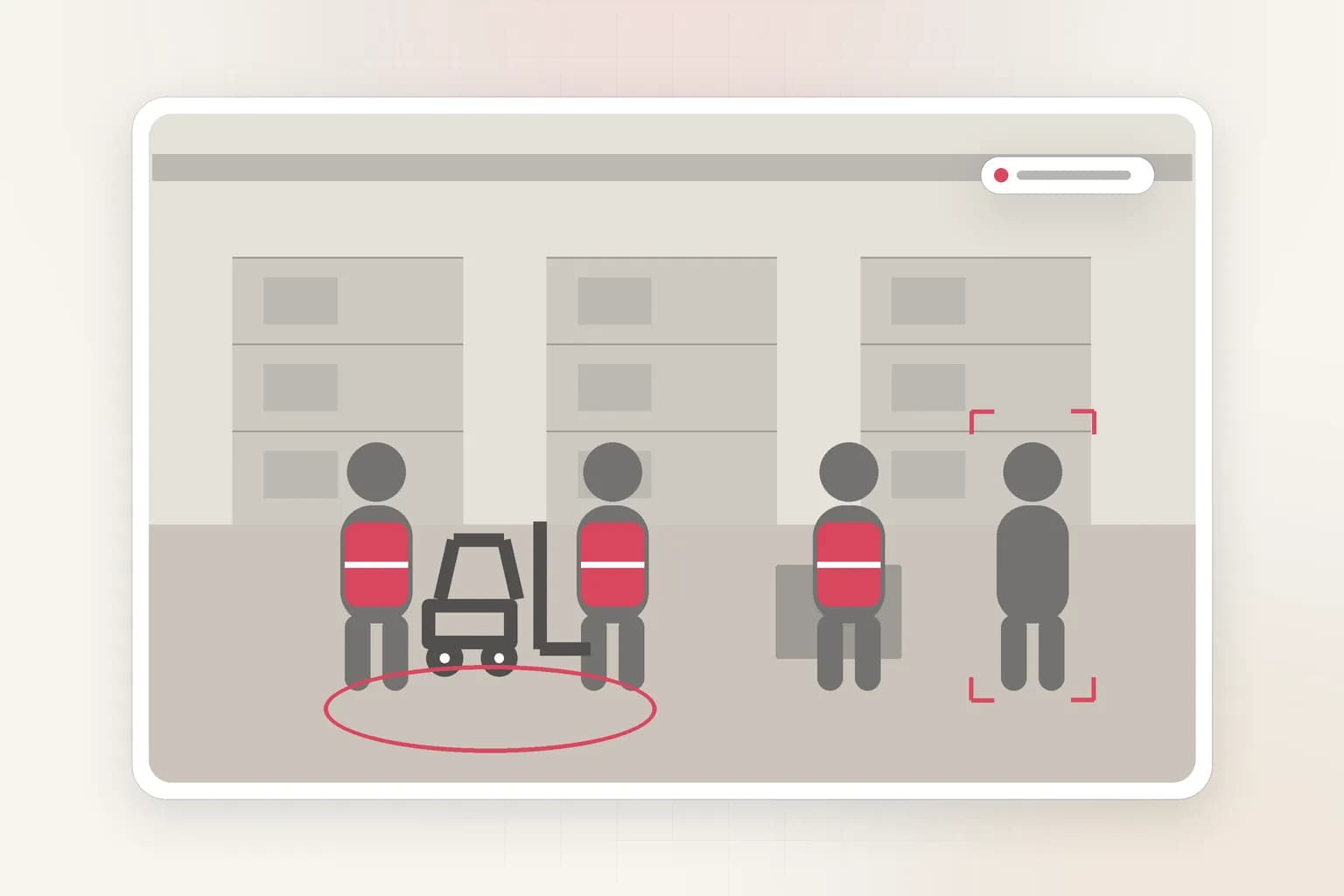
A PPE detection camera is not always a new hardware SKU — it is video analytics that checks whether people inside a hazard zone wear required personal protective equipment (helmet, hi-vis vest, gloves, or site-specific gear) and alerts when something is missing. Teams search ppe detection camera when they want hard-hat and vest compliance on CCTV they already own, without a full camera refresh. This guide covers placement, accuracy evidence, India and global rules, and how software-only workflows such as PPE safety compliance fit beside traditional VMS recording.
What does a PPE detection camera actually detect?
Vendor pages describe similar class lists. Hikvision's PPE detection targets missing hard hats in high-risk areas and can notify when gear is removed. Pelco's PPE monitoring emphasizes context-aware detection and low false positives in varied lighting.
In practice, buyers care about three layers:
| Layer | Question | Typical output |
|---|---|---|
| Presence | Is anyone in the zone? | Person / vehicle gate for the rule |
| PPE classes | Which items are required? | Helmet, vest, gloves, glasses, boots |
| Compliance | Is the worker missing any required item? | Alert with snapshot and timestamp |
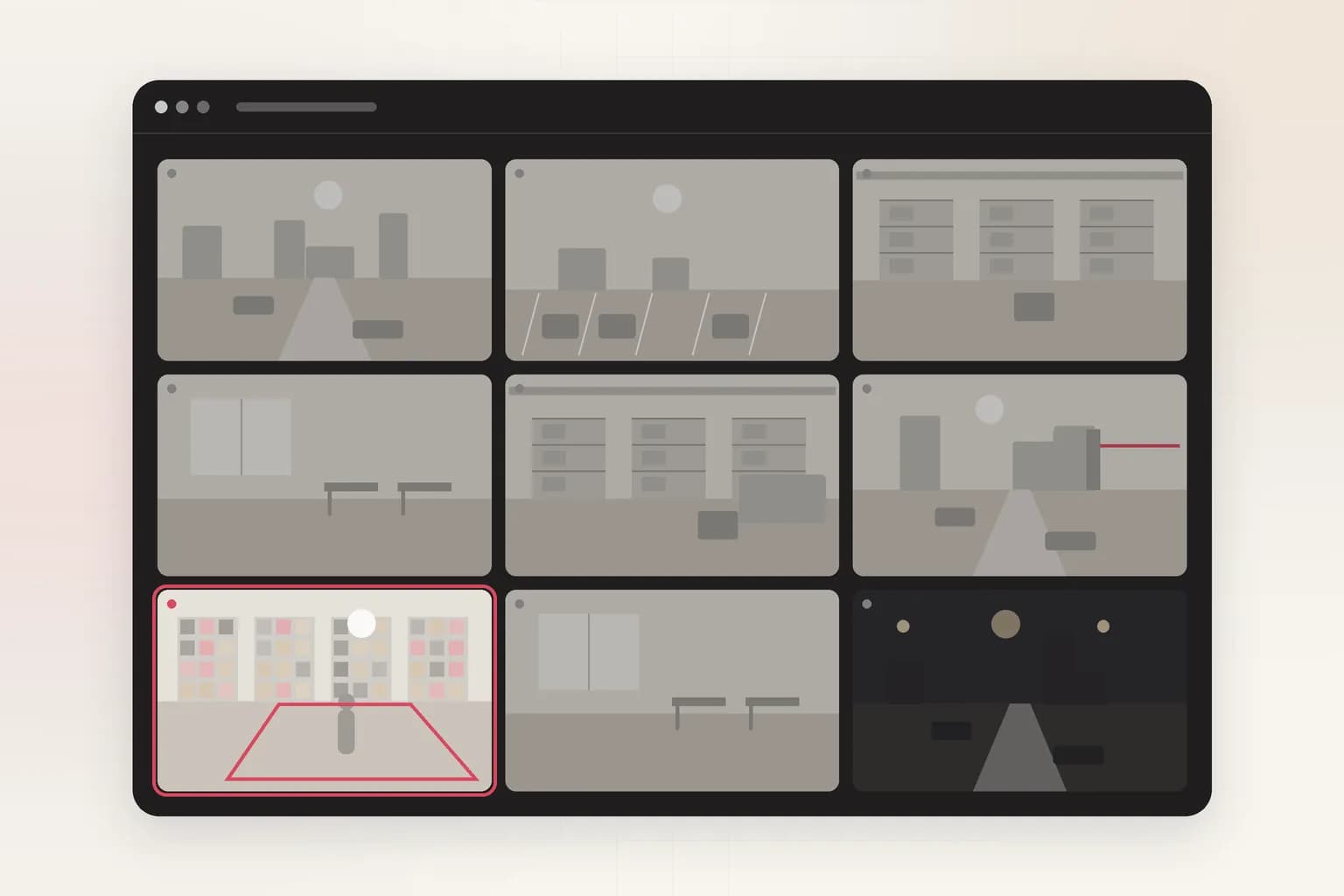
Ceptory's built PPE check workflow lets you toggle helmet, hi-vis vest, and gloves per camera, draw a zone (canteens and offices stay out), and send alerts with photos to mobile, email, or team channels (feature page). That matches use case UC4 in Ceptory's factory and construction playbooks: continuous checks where supervisors cannot stand all day.
How should you position cameras for PPE detection?
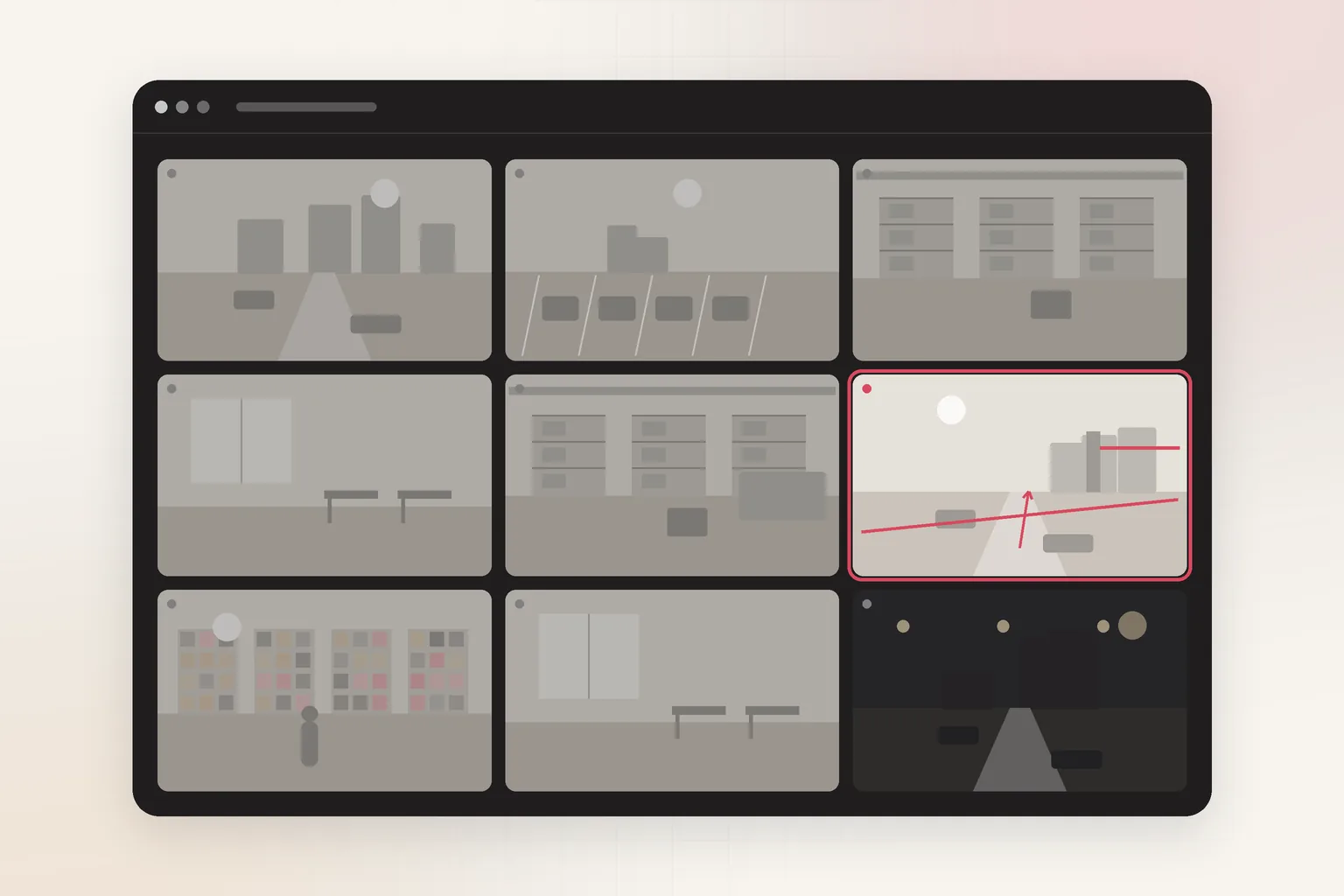
Detection quality is a geometry problem before it is an AI problem. Field summaries such as NUSA Safety's review of construction-site studies cite 3–5 metre viewing distances and recall gaps for shoes and safety glasses when angles are steep or workers are occluded by scaffolding.
Placement checklist:
- Overhead or 30–45° down on the work face, not ground-level looking up through helmets.
- Full upper body visible at the moment work happens (not only when entering the zone).
- Lighting matched to night shifts — glare and deep shadow confuse both classical CV and learning models.
- One zone per rule — loading docks versus weld booths may need different required gear lists.
- Cooldown so one worker without a vest does not generate fifty alerts per minute.
If the angle cannot see whether a vest is worn under a jacket, analytics cannot fix it; add a camera or accept vest checks at the gate only.
How accurate are PPE detection cameras in the field?
Peer-reviewed construction tests show strong lab scores and weaker field recall on small PPE classes. Langi and Fadllullah (2026), summarized in the NUSA Safety article, reached high precision on helmets and vests on 90 site frames but recall near 0.62 for safety shoes. Ding and Luo (2024) show mAP falling sharply in fog, rain, and dust even when baseline daylight scores look good.
A systematic review in Artificial Intelligence Review lists wider barriers: environment variation, compute cost, employee identification ethics, and lack of standard public datasets for factory floors.
Implications for buyers:
- Run a two-week pilot and log missed violations supervisors still catch manually.
- Optimize for recall on helmet and vest first; treat glasses and boots as phase two unless angles prove them.
- Do not quote marketing 98% accuracy without your own confusion matrix — Ceptory does not publish site accuracy figures.
For investigating past shifts, export video and search "worker without helmet" in indexed footage via AI video search how it works rather than rewatching entire timelines.
What rules apply in India and globally?
India — factories and construction: The Factories Act, 1948 and state rules require employers to provide and enforce PPE where hazards exist; inspectors expect documented safety programmes, not only cameras. DPDP Act 2023 applies to personal data in footage; PPE-only detection in a zone with minimal retention is simpler to defend than face identification archives. Pair camera policy with CCTV retention under DPDP.
United States — OSHA: OSHA expects employers to assess hazards and provide PPE; OSHA's PPE overview frames training and enforcement. Video analytics supports documentation for serious incident reviews but does not replace hazard assessments or training records.
UK — HSE: The HSE PPE guidance stresses suitable equipment, maintenance, and training — again, cameras supplement supervision.
Cameras do not create a new legal exemption: if you cannot enforce PPE manually, automation will not satisfy an inspector without procedures (who responds to alerts, escalation, disciplinary steps).
PPE detection camera vs edge box vs cloud indexing
| Approach | Fits when | Trade-off |
|---|---|---|
| Camera/NVR built-in analytics | Greenfield, single vendor stack | Locked to firmware roadmap |
| Edge GPU box | Many channels, on-prem low latency | Hardware quote, site survey |
| Software-only (Ceptory) | Existing IP cameras, self-serve trial | Needs outbound HTTPS; frame interval not millisecond latency |
Ceptory is software-only: install Ceptory Desktop on a site PC, add RTSP cameras, pick the PPE check workflow, draw zones, and route alerts. No published SDK — integrations are REST API and MCP for agents. Windows desktop and VMS plugins remain roadmap items; today macOS desktop is built, Windows is not yet (pricing).
For recorded incident review, upload shift exports to a footage chat and use search to find "no hard hat near crane" moments instead of manual scrubbing — related to how much manual video review costs.
Older overview material lives in workplace safety monitoring and compliance; this page focuses on the ppe detection camera query and existing CCTV deployment.
What should you do before you buy?
- Map zones where PPE is legally required — weld, height, forklift aisles, not break rooms.
- Audit camera angles against the placement checklist; budget repositioning if needed.
- List required gear per zone (helmet-only vs helmet+vest+gloves).
- Pilot two weeks — measure missed violations and alert noise.
- Write response SOP — who acknowledges mobile alerts within minutes.
- Align retention with HR/legal — shorter loops where possible.
- Train supervisors that alerts are coaching and audit evidence, not automatic discipline alone.
Export a sample shift and validate search on Ceptory before you scale camera count.
How do you run a two-week PPE detection camera pilot?
Week 1 — shadow mode: Enable rules but route alerts only to the safety lead. Supervisors continue manual rounds. Log every true violation they catch that did not alert.
Week 2 — live mode: Turn on mobile notifications for shift leads. Measure mean time to acknowledge and whether violations stop without formal discipline (coaching effect).
| Metric | What good looks like | Red flag |
|---|---|---|
| Recall on helmet/vest | Missed violations under 10% of manual sample | Missed violations over 25% |
| False positives | Under one nuisance alert per camera per shift | Guards disable notifications |
| Response time | Acknowledge within 5 minutes on critical zones | Alerts ignored after day three |
Use the incident report template when a missed alert coincides with a near miss — documentation matters more than dashboard vanity metrics.
Which industries get the most from a PPE detection camera?
| Industry | Typical zone | Gear | Caveat |
|---|---|---|---|
| Construction | Scaffold deck | Helmet, harness visibility | Occlusion from rebar |
| Manufacturing | CNC aisle | Helmet, gloves, safety shoes | Oil mist on lens |
| Warehouse | Dock plate | Hi-vis vest | Cold storage glare |
| Logistics | Forklift crossing | Vest, boots | Fast motion blur |
| Hospitals (facilities) | Plant room | Helmet for contractors | Separate from clinical privacy rules |
Ceptory industry pages such as manufacturing PPE safety map to the same workflow; adjust required gear toggles per zone rather than enabling every class everywhere.
How does PPE detection camera software compare to manual review?
Manual spot checks cover minutes per shift; continuous analytics cover every frame sent at the workflow interval. That does not mean every frame is stored forever — it means rules run repeatedly without a guard staring at tiles.
The video review cost calculator shows why manual review of all shifts is economically unrealistic at 40+ cameras. PPE analytics trades capital and software spend for coverage. It does not remove the need to investigate ambiguous clips: use search on exported shift video when an alert looks wrong.
See beyond manual video review for the broader automation pattern and video intelligence platforms versus traditional VMS for where detection sits relative to plain recording.
What privacy steps should HR and legal review first?
- Signage where CCTV and analytics apply (state labour and privacy rules vary).
- Purpose limitation — PPE compliance only, not performance scoring, unless policy explicitly covers both.
- Retention — shorter loops for compliance alerts than for incident evidence; align with how long to keep CCTV footage.
- Third-party sharing — blur faces and plates before sending clips to insurers or contractors; BGBlur handles redaction workflows.
In India, document DPDP lawful basis and access controls on the alert feed. In the EU, GDPR DPIAs may apply when analytics profile workers — consult counsel before face-linked analytics.
How do you tie PPE alerts into daily operations?
Alerts should land where supervisors already work, not in a siloed SOC inbox nobody opens on the floor. Route critical helmet misses on an active weld line to the shift lead's phone, info-level vest reminders to a Teams channel reviewed once per shift, and weekly rollups to safety for trend charts (repeat cameras, repeat contractors).
Escalation should be explicit: if acknowledge does not happen within 15 minutes, bump severity or page the plant manager. Ceptory supports acknowledge and resolve on mobile; the audit trail should show who closed the loop, not only that the model fired.
Finally, connect alerts to training, not only discipline. A cluster of vest violations on Monday mornings often means contractor induction gaps, not malice. Use indexed footage to build a two-minute coaching clip rather than a generic slideshow — the same search workflow that finds incidents can find positive examples of compliant teams for toolbox talks. On Indian factory floors, pair PPE rules with person-down detection on existing CCTV on the same aisle cameras.
Frequently asked questions
What is a PPE detection camera?
It is video analytics that checks whether people inside a defined work zone wear required personal protective equipment such as helmets, hi-vis vests, or gloves. Alerts fire when required gear is missing. It can run on live streams from compatible recorders or on uploaded footage for investigations.
Can I add PPE detection without buying new cameras?
Often yes, if existing cameras cover the hazard zone at usable angle and distance. Software-only platforms analyze RTSP or exported clips from Hikvision, Dahua, CP Plus, and other IP cameras. Poor angles or heavy occlusion still require repositioning or extra cameras.
How accurate are PPE detection cameras?
Lab papers report high precision on curated datasets, but field studies show recall drops for small gear like safety glasses and shoes, and in rain or dust. Pilot on your site for two weeks and count missed violations, not only nuisance alerts.
Do PPE detection cameras replace safety officers?
No. They extend supervision across shifts and zones, but human oversight, training, and discipline processes remain required. OSHA and Indian factory rules still expect documented safety management, not only automation.
What is the difference between PPE detection and face recognition?
PPE detection classifies equipment on the body in a zone. Face recognition identifies who someone is. For compliance, PPE-only workflows reduce privacy risk; redact faces before you share footage outside the organisation.
Does Ceptory offer PPE detection on cameras?
Yes. The built PPE check camera workflow alerts when helmet, hi-vis vest, or gloves are missing in a user-drawn zone, with mobile and Slack-style notifications. It uses frames sent on an interval, not a separate edge box.
Ceptory
Search your own footage in plain language. The free tier indexes 60 minutes of video.