Video Intelligence
What Is an MCP Video Connector? Twelve Labs Explained
An MCP video connector exposes search and analysis as agent tools. See how Twelve Labs MCP and Jockey work, their limits, and how they compare with Ceptory MCP.
TL;DR
An MCP video connector is an MCP server that lists video indexing, search, analysis and embedding as tools an AI assistant can call at runtime. Twelve Labs documents both a developer MCP server and a Jockey connector; Ceptory MCP adds camera alerts and cross-camera movement for security teams.
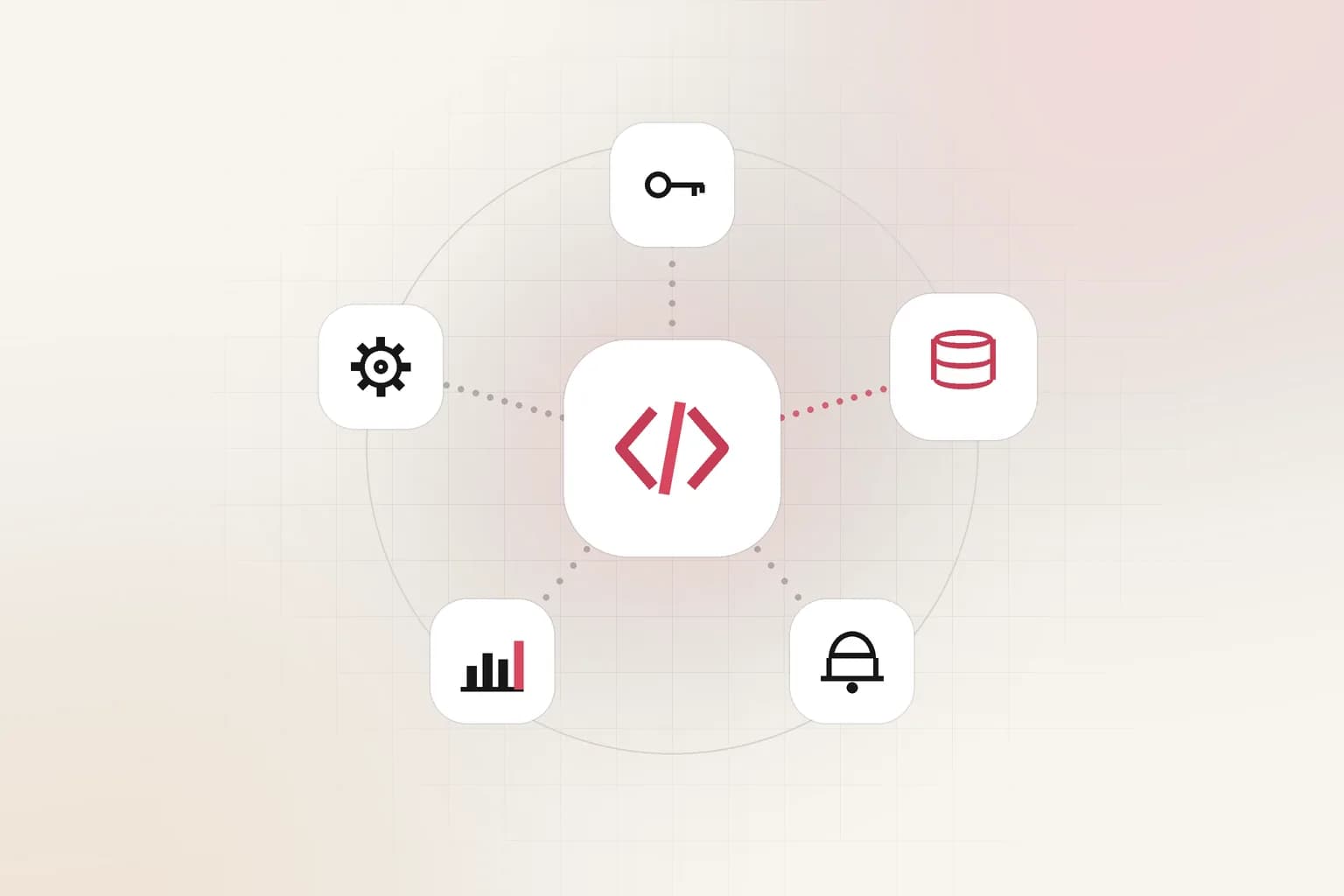
What is an MCP video connector? It is a Model Context Protocol server that turns video indexing, search, analysis and embeddings into tools an AI assistant can discover and call at runtime, instead of your engineers writing custom glue for every client. On September 12, 2026, Twelve Labs published a long guide that names two shipping paths: a developer MCP server and a Jockey connector for library questions inside Claude and ChatGPT. The same week, buyers typing video mcp connector or mcp video connector are really asking whether agent-driven video search is ready for production—or still a prototyping layer on top of a video intelligence API.
What problem does an MCP video connector solve?
Manual tags and filenames break down fast. Twelve Labs opens its post with editors who cannot find clips in growing libraries without scrubbing. A connector moves search, segment metadata and embeddings into the assistant the user already has open—Cursor, VS Code, Claude Desktop—so a producer can ask for moments in plain language.
The Model Context Protocol specification defines MCP as an open way for hosts (LLM apps), clients (connectors inside the host) and servers (your video platform) to exchange JSON-RPC 2.0 messages. Servers may expose tools (callable functions), resources (readable context) and prompts (templates). The spec also stresses user consent before tools run and before data leaves the host—relevant when footage contains identifiable people.
Without a connector, each assistant needs per-client API code that maps endpoints to functions and must be updated when the API changes. With a connector, the client lists tools at session start and calls them by name. Each client still needs configuration and credentials.
How does the Twelve Labs MCP server work?
Twelve Labs describes its MCP server as built for MCP clients and developer workflows. Capabilities exposed as tools include indexing, semantic search, analysis and embeddings, aligned with its Marengo and Pegasus models.
What do discovery and approval look like?
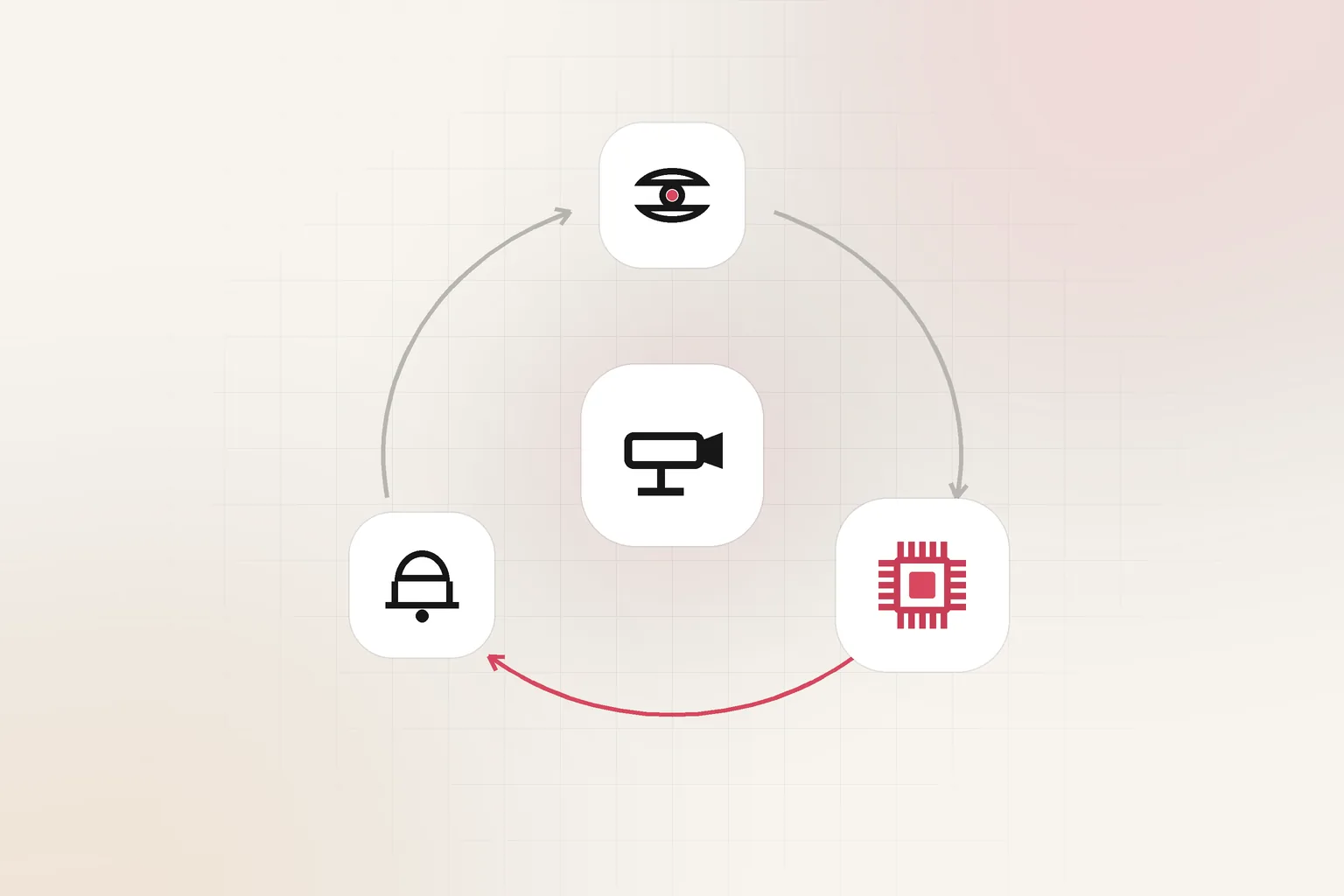
At session start, the client pulls the server's tool list. When the model chooses a video tool, the client issues an MCP tool call.
For Jockey inside Claude, Twelve Labs says the connect guide describes an approval prompt on the first tool call, with choices such as Allow once or Always allow. Wording differs by client. Twelve Labs notes that the MCP tools specification expects humans to be able to deny invocations but does not mandate a specific UI—Cursor, Goose and VS Code may behave differently.
That approval step is why Twelve Labs characterizes connectors as better for exploration than unattended production pipelines: every new session may pause for consent, and usage still meters against the Twelve Labs plan.
Which clients can attach?
Twelve Labs lists Cursor, VS Code, Claude Code, Gemini CLI and Goose as example clients. Documentation requires a client that supports remote HTTP MCP servers with OAuth. Clients that only support local stdio servers can fail at sign-in—platform owners should verify transport support before rolling out agents to editors.
Setup needs a Twelve Labs API key and client-specific steps in the installation guide.
What changed about the server address?
Twelve Labs moved the try server to mcp-alpic.twelvelabs.io/try. The earlier host mcp.twelvelabs.io/try was scheduled for retirement on July 15, 2026. Agent configs that still point at the old URL should be treated as broken until updated—this is one of the few hard deadlines in the post.
How does Jockey differ from the developer MCP server?
Twelve Labs ships two connector shapes:
| Piece | Role | How users connect |
|---|---|---|
| MCP server | Exposes Marengo/Pegasus-style search, analyze, embed tools | API key + MCP client config; remote HTTP + OAuth |
| Jockey connector | Conversational agent for library-level questions across a knowledge store | Claude Connectors Directory sign-in; ChatGPT Plugins per connect guide (product page also listed ChatGPT as coming soon when Twelve Labs wrote the post) |
Jockey's separate MCP URL is documented as mcp.twelvelabs.io/jockey/mcp for OAuth-capable clients that are not using the directory flow. Twelve Labs positions Jockey under Agents, with corpus-level reasoning and multi-turn sessions, while Models APIs remain the path for embedding pipelines and per-video analysis where developers set volume and refresh schedules.
The post also warns that search embeddings and standalone Marengo embeddings are not interchangeable: an engineer who pilots search through MCP then builds an embedding pipeline must confirm which Marengo setup each route uses before comparing retrieval quality.
What limits and file rules does Twelve Labs document?
Twelve Labs calls out several operational ceilings that matter when agents upload clips:
- Video resolution from 360×360 to 5184×2160 appears in docs.
- Public URL uploads cannot use arbitrary cloud sharing links; the connect guide says Jockey can fetch some public YouTube, TikTok, Instagram Reels and Google Drive share links.
- File size is documented inconsistently: upload methods list 4 GB for multipart video, while an analyze guide mentions 10 GB; Twelve Labs recommends planning to the lower figure unless your team re-checks the upload page.
- Images for Marengo accept up to 32 MB in one doc but 5 MB on the upload method—plan queries to the stricter cap.
For Pegasus analyze via Models API, Twelve Labs states public URLs up to 4 GB, local files up to 200 MB, synchronous processing under one hour, asynchronous up to two hours (with longer partial analysis possible). The MCP post does not promise the MCP server inherits every Models limit—teams should confirm before large pilots.
How does Twelve Labs price usage behind MCP calls?
Connectors do not bypass billing. Twelve Labs pricing (checked November 2026) shows Free ($0), Plus ($29/month), Pro ($99/month) and Enterprise (custom) plans. Each includes Managed Intelligence storage and a monthly Workload allowance for Analyze, Segment, Embed, Marengo Search and Jockey Responses.
Jockey Search on assets indexed into a Knowledge Store counts toward Managed Intelligence; Marengo Search counts toward Workload. When allowances exhaust, Free and Plus block new workload unless you upgrade; Pro can enable overage. A pilot that lets an assistant run open-ended searches can consume quota quickly—Twelve Labs explicitly recommends checking how the plan counts usage before a large MCP trial.
Our Twelve Labs competitor profile summarizes plan tiers for side-by-side budgeting with other video understanding APIs; see also video intelligence API alternatives.
When should you pick a connector versus a video API?
Twelve Labs' guidance—stated as their view, not a normative doc requirement—maps cleanly to buyer conversations:
| Path | Best when | Trade-offs |
|---|---|---|
| MCP connector | Editors or engineers explore query phrasing, inspect timestamps, and test precision before writing app code | Approval prompts, agent query planning, and metering shape results; not a substitute for governed production ETL |
| Models APIs | You operate embedding pipelines, scheduled re-indexing and fixed QPS in your own service | You build UI, auth, retention and review workflows |
| Agents (Jockey) | You want corpus-level reasoning and multi-turn planning across a library | Research-preview positioning; connector availability varies by client |
That split mirrors how we explain what a video intelligence API is: the API is the contract; MCP is one front door for humans and agents to exercise it.
For background on proactive agents that decide when to speak during live video—distinct from searchable archives—see our note on StreamVibe and proactive video agents. MCP connectors discussed here focus on tool calls, not streaming interruption.
How does Ceptory MCP compare for security and operations footage?
Ceptory also ships a remote MCP server (mcp.ceptory.com) with OAuth 2.1 sign-in and 42 tools that call the same route handlers as the dashboard—so permissions, rate limits and billing match whether a human or an agent acts.
Where Twelve Labs centers media libraries and creator archives, Ceptory MCP is built for CCTV and operations video already on your account:
- Footage chats: create chats, add video by URL, check indexing status, search and analyze uploaded exports.
- Cameras and alerts: list cameras, acknowledge or resolve alerts, pull alert photos, run workflows on frames.
- Movement: follow a person or vehicle across cameras on a site—a pattern security teams ask for after incidents.
- AI engines: list and run engines from the 42-engine catalogue on an image when a specialist check is needed.
Ceptory is software-only: it does not sell cameras. You still export from your NVR or upload clips; MCP agents then search and triage what you lawfully ingested. There are no published SDKs; integrators use REST or MCP, not a vendor-maintained client package.
Pricing is usage-based on the platform: $0.042 per minute indexed plus $0.0015 per minute infrastructure, search at $4 per 1,000 queries, with 60 minutes indexed free—details on /pricing. Twelve Labs' subscription caps and storage buckets fit teams standardizing on Marengo/Pegasus inside their own product. Ceptory fits when you want a finished operations dashboard, natural-language search and agent control of cameras without assembling models, storage and UI yourself.
Neither path removes privacy review: MCP's specification requires explicit consent before tools access user data. Footage with bystanders still needs retention and purpose policies—especially in India under the DPDP Act, covered in our CCTV retention guide.
What should your team do now?
- Inventory clients — Confirm each assistant supports remote HTTP MCP + OAuth; retire configs still pointing at retired Twelve Labs hosts.
- Pick a pilot library — Start with 10–20 representative clips (low light, overlapping speech, vertical video) before enterprise volume, matching Twelve Labs' own recommendation.
- Write ten real queries — Use questions your moderation, security or ops team already asks; measure timestamp precision, not just chat fluency.
- Compare MCP to REST — Run the same query through Ceptory's API or Twelve Labs Models search; note latency, cost and whether agent planning changes results.
- Document consent — Align with MCP's user consent principles: who may authorize tool calls that export or search identifiable people.
- Plan production separately — If the pilot succeeds, lock index refresh, retention and review queues in your app; treat MCP as exploration, not unmetered production cron.
Teams evaluating Twelve Labs for developer APIs should read our Pegasus and Snowflake integration note for how enterprises wire embeddings into warehouses—orthogonal to MCP, but part of the same ecosystem.
Where does this leave buyers?
MCP video connectors make video search and analysis reachable from IDEs and chat clients without bespoke integrations—a real shift for media archives and developer-led pilots. Twelve Labs' September 2026 guide is the clearest vendor-written map of tool discovery, dual servers (developer vs Jockey), OAuth requirements and embedding-space pitfalls.
For security, housing societies, factories and logistics sites, the buying question is whether agents must operate cameras and alerts, not only search uploads. That is where Ceptory combines MCP, cross-camera movement and plain-language footage search on exports you already own—while staying honest that neither MCP nor API replaces lawful export, retention and notice on the ground.
Frequently asked questions
What is an MCP video connector?
It is an MCP server that registers video capabilities—indexing, semantic search, analysis, embeddings—as tools an LLM client discovers at session start. The assistant calls those tools over JSON-RPC instead of your team hand-wiring each HTTP endpoint per client.
What did Twelve Labs publish about MCP video connectors?
On September 12, 2026, Twelve Labs posted an explainer defining its MCP server for developers and a separate Jockey connector for library-level questions inside Claude and ChatGPT. It documents tool discovery, approval prompts, OAuth, file-size limits and a server URL change.
What is the current Twelve Labs MCP server URL?
Twelve Labs moved the try server to mcp-alpic.twelvelabs.io/try and scheduled retirement of mcp.twelvelabs.io/try on July 15, 2026. Configurations still on the old host should be updated before agents fail to connect.
How is Jockey different from the Twelve Labs MCP server?
The MCP server exposes Models-style search, analyze and embed tools for developer clients such as Cursor. Jockey is a conversational agent for corpus-level reasoning across a knowledge store, listed in Claude's connector directory, with its own address at mcp.twelvelabs.io/jockey/mcp for other OAuth clients.
Does Ceptory offer an MCP video connector?
Yes. Ceptory MCP at mcp.ceptory.com exposes 42 tools with OAuth 2.1 sign-in for footage search, camera workflows, alerts, movement across cameras and engine runs—the same routes the dashboard uses. It targets operations and security footage, not only media libraries.
When should a team use an MCP connector instead of a video API?
Twelve Labs says connectors suit assistant-driven exploration where editors test queries before production code. Use a direct video intelligence API when you own request volume, index refresh and billing in your own app. Many teams pilot in MCP, then lock patterns into REST calls.
Ceptory
Search your own footage in plain language. The free tier indexes 60 minutes of video.
Related reading
Keep reading
Video Intelligence · 8 min read
Pegasus 1.5 in Snowflake Cortex: Video Analysis From SQL
Read article
Video Intelligence · 8 min read
Video Intelligence API: Building Multimodal Retrieval and Analysis Workflows
Read article
Comparisons · 8 min read